Charging a fleet is a supply problem before it is a charger problem.
Six vans on charge at six in the evening is a bigger load than most of the site. We work out what your supply will carry before we talk about hardware.
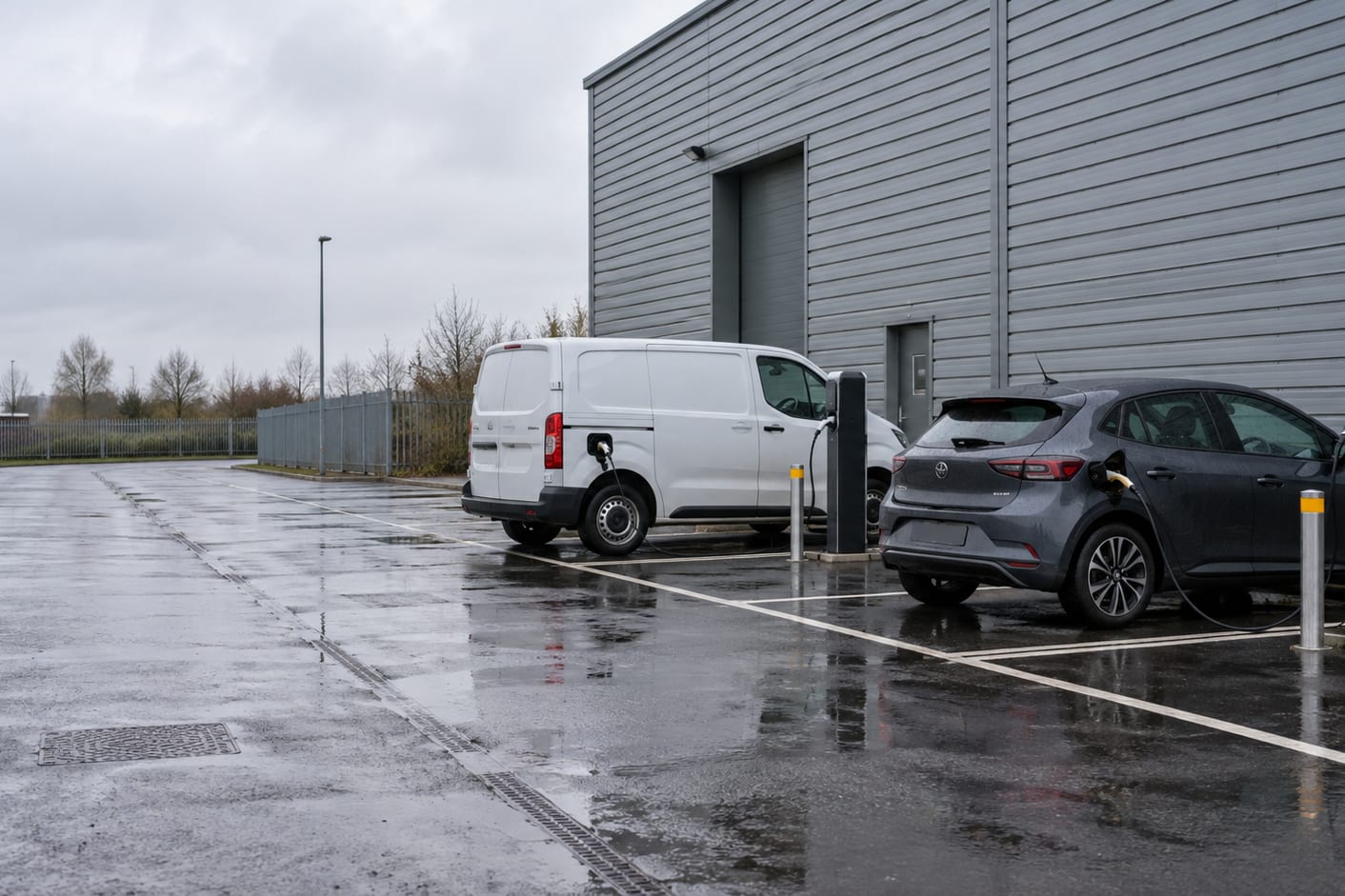
Who is charging, and when
The dwell time decides the hardware. Get that wrong and you pay for speed nobody uses.
- Staff parking
- Slow, long dwell, many bays
Cars sit for eight hours, so the per-bay power can be low and the total can still be high. Load management across the bays is what keeps the site inside its supply, and it costs far less than more capacity.
- Fleet and vans
- Known routes, known return times, one window
A fleet charges on a schedule you control, which is the easiest case to manage and the hardest to get wrong cheaply. Sequencing the vans across the night usually removes the need for an upgrade altogether.
- Visitors and customers
- Fast, short dwell, few bays
A visitor wants range in twenty minutes, which means rapid hardware, a much bigger supply demand and a payment mechanism. This is the expensive one, and it is worth being clear about why you want it.
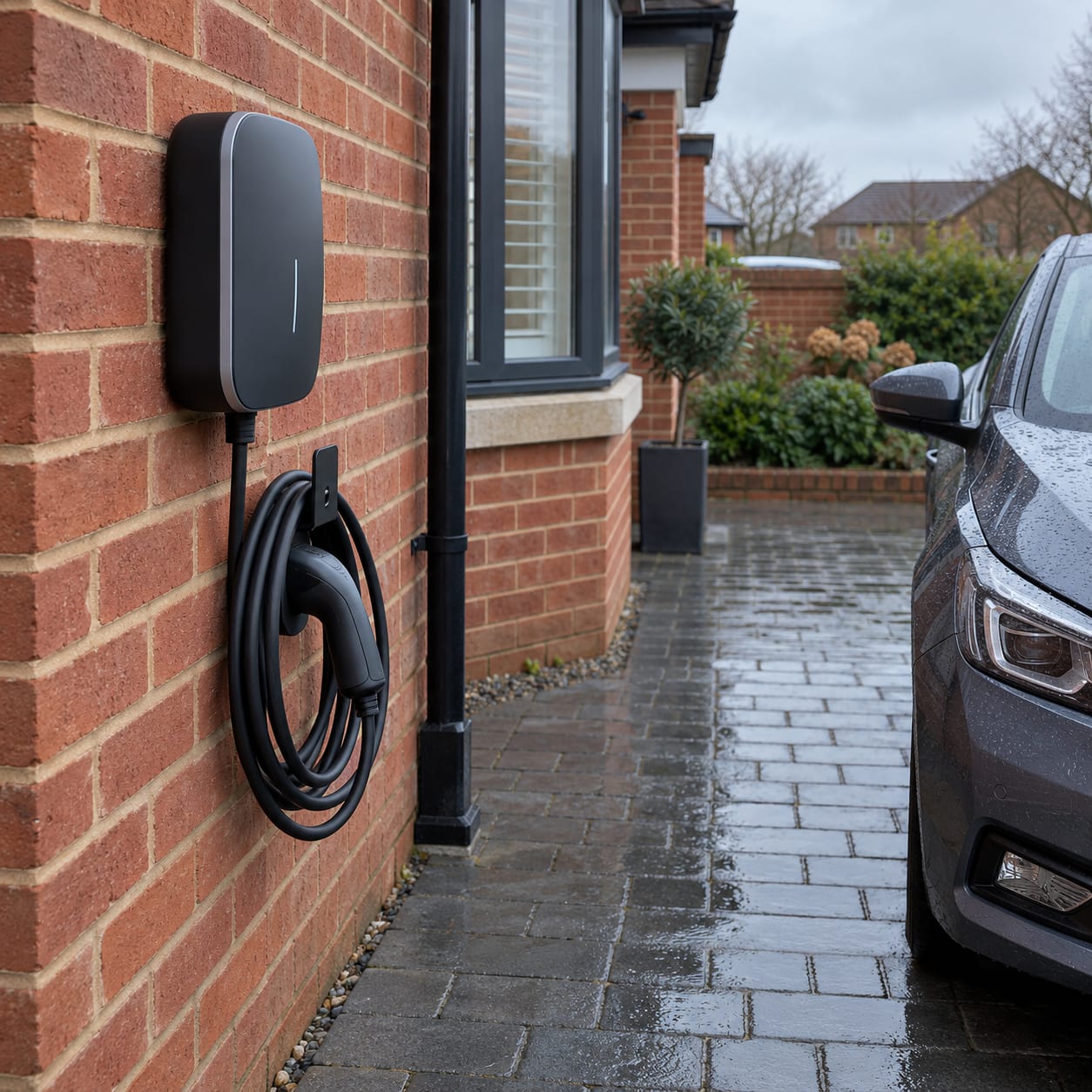
Load management and supply capacity
Your agreed supply capacity is the ceiling
Every commercial supply has an agreed capacity, and your contract charges you for having it whether you use it or not. Going past it costs money through excess capacity charges, and on some sites it trips the main protection, which costs a great deal more.
Chargers are the load most likely to push a site past that ceiling, because they all tend to start at the same time.
Dynamic load management
A meter on the incoming supply tells the charger controller what the rest of the site is doing, and the chargers are backed off in real time so the site peak is never breached. Every vehicle still charges, it just shares what is spare.
This is the single most useful thing on a workplace site, because it turns what looks like a reinforcement project into a software setting and a current transformer.
When an upgrade really is needed
Where even the managed load will not fit, or where rapid chargers are the point, you need more capacity. That is an application to the Distribution Network Operator, a quotation for the reinforcement works, and a lead time measured in months rather than weeks.
We make the application, we tell you the figure when it comes back, and we show you the managed-load alternative beside it so the comparison is yours.
Where a battery changes the answer
Storage absorbs the charging peak and refills in the quiet hours, so a site can run more bays than its supply would otherwise allow. On a site with solar it also means the vans leave on units the roof made. See commercial battery storage for how we size one.
Grants
The Workplace Charging Scheme exists for businesses and has a cap per socket and a cap per site, and the application has to be approved before the work starts. The rules and the caps change, so we check your eligibility rather than promising it, and we tell you the answer before you commit to anything.
Who pays for the electricity
Keep it simple
- Free to staff and treated as a benefit, with the cost and the tax position agreed with your accountant first.
- Fleet charging billed internally against the vehicle rather than the driver.
- A flat reimbursement per mile for home charging.
- No back office, no payment hardware and nothing to administer.
Charge for it
- A back office that meters each session and bills the driver or the department.
- RFID or app authentication per user.
- Public tariffs and card payment, which bring in payment regulations and a different class of hardware.
- We will fit whichever you choose. We will also tell you when the back office costs more than the electricity it is billing.
What a site visit covers
Count the vehicles and the hours
How many vehicles charge, when they arrive and when they have to leave. A van back at six and out at seven in the morning has eleven hours, which is a completely different specification from one that turns round in an hour.
Read the supply
We read the incoming supply, the main breaker rating and the agreed capacity, and we take the half-hourly data to see what headroom there actually is across the day rather than on average.
Walk the cable routes and the bays
From the intake to the bays, across a yard, along a wall or under tarmac. Trenching and surfacing is the usual cost driver outdoors, and a route that follows an existing duct or fence line can halve the price of the same installation.
Price the options side by side
Managed load on the existing supply, a larger supply, and a staged version that starts with containment for bays you will fit later. You get all of them with what each one does to the cost, rather than one answer we have chosen for you.
Common questions about workplace charging
Yes, as long as the containment and the supply are designed for it now. Pulling in a larger cable and running spare ducts while the trench is already open is cheap. Doing it again in two years means digging up the same yard twice, so tell us the eventual number even if you are only fitting two bays today.
Not necessarily. Many workplace sites are better served by more slow bays sharing the existing supply than by fewer fast ones that force an upgrade. We model both against how long the vehicles are actually parked and show you what each option costs.
We quote a maintenance plan with the installation. A charger on a working yard takes more abuse than one on a domestic drive, so connectors, cable management and enclosures need checking rather than assuming, and firmware has to be kept current.
Yes, and on a site that is busy during the day it is the best match of the three technologies, because the vehicles are parked exactly when the array is producing. We model the charging load and the generation together, which is covered on our commercial solar page.